

As Sung by a Lipan Medicine Man at the turn of the 20th century
These songs have been hidden from view for more than 80 years. The songs were recorded by a BIA Agent in 1910, in the White Mountains area, just off the Clear Fork River.
The name of the Apache Medicine Man who's owned these songs has long since died, but long shall his songs be revered. As is Lipan custom, his name is not allowed to be spoken in public. Permission to use these three Apache songs was given by a modern-day Lipan Medicine Man.
The "'Idìyitá" Song
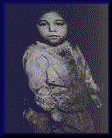
He Makes It Walk Song
djùnà' ái bìdà' tíngè' t' á ìgaì dì gò'
Sun, his doorway outside, White water, four-ply
bè dà' gùnòyè gè' dè yà tc' ìndí dì
By, above, mirage at, he walks, they say
djígùnà' ái bìjà jé' dá à' dj ' dè yà tc' ìndí d
Sun, his child one day he walks they say
'ìckî n dá à' dj ' dè yà h dè yà tc' ìndí d
Boy, one day the one who walks, he walks they say
djùnà' ái bì dùt ' ìjì bìnànt' à' nànt' à' dòxá yò'
Sun, his turquoise his chief, chief never
bì ' ágòdo dí ì' bì dìs' èsts' tc' ìndí
has he trouble with him sound approaches they say
djùnà' ái bè bì' ò' gùnòyè ì' yè
Sun by, before him mirage by
bì' ò' gùnòyè gò' dè yà tc' ìndì
before him mirage forming he walks they say
nùgùsts' án biìká' 'ìyú ndzìní' dò à'
Earth on top of, witches none
hà bídòl gò' dè yà tc' ìndí d
Can harm him, he walks they say
nùgùsts' án biìká' dé 'ì tc' ' òdàsdjà í'
Earth on top of, people scattered about
bìyá tì' jò ní bìnàtsé kè s jò ní' bìdlùk jò ní
Their talk good, their thoughts good, their laugther good
bínà lzé' 'í t' à' dá' jò dí dò bé' ó ltà' gò'
Their property of all kinds, good, uncountable
yèxáidèlà gò dè yà tc' ìndí d
Having been prepared he walks they say
'ìs' à' nà yái k' è' gòjó gò' yèxáidèlà gò dè yà tc' ìndí d
Long life like, good, having been prepared he walks they say
The "ìdìyi á" "he make it walk" ceremony and song's sole purpose is to aid children who are slow at learning to walk. Through this song, the offering of prayer and life-long protection from evil is given. This ceremony can be performed for children before twelve months of age to ensure they will walk on or before their first year. When performing this ceremony a man or women can perform the rites. If not done by a close blood relative, then hire a medicine man or medicine woman. The rite takes about ten minutes each night, repeated for four nights under a clear night sky. Give a gift of turquoise, made with downy eagle feathers.
The "Gòjó sí" Song
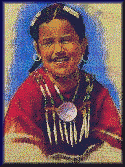
The Blessing Song for Girls
'ìs' à' nà yái k' è' gòjó 'àná' hòkùs
Long life like, good, moves back and forth
t' á ìgaì bìt ' á' éd yùd 'á lzà tc' ìndí
White water underneath in a circle, it is made, they say.
'ákó gò' t' á ìgaì bìká' nà' íljò jgò 'á lzà tc' ìndí
Then White water, on it, spread across it is made they say
yò gài sìyùdì 'ìt á' nèz' ágò' 'á lzà tc' ìndí
White shell curved over, beneath it rests, it is made, they say
gòdìt' ó' bàsxà' híljìj tc' ìndí
Lightning alongside dances, they say
gòdìt' ó' bèbìk' è nà ìst ' ó tc' ìndí
Lightning by it fastened across, they say
hí tsát ' ùl bìt' ùl 'á lzà tc' ìndí
Rainbow its rope it is made they say
t' ádì xì bìtc' ìd bìt ' á' sì tsò z
Black water blanket underneath rests
t' á ìgaì bìtc' ìd bìt ' á' sì tsò z
White water blanket underneath rests
'ìs' à' nà yái k' è' gòjó ts' á 'á lzà tc' ìndí
Long life like, good, baby-carrier it is made they say
djùnà' ái bìnànt' à' bè bìyì' gùdìtní tc' ìndí
Sun, his chief, by, inside it rumbles they say
The "gojo si" is a "cradle song" ceremony and song whose sole purpose is to aid and provide supernatural powers to baby girls into womanhood. Through this song, the offering of prayer and life-long protection from evil is given. This ceremony is to be performed for baby girls into puberty to ensure their fertility before marriage. When performing this ceremony a man or women can perform the rites. If not done by a close blood relative, then hire a medicine man or medicine woman. The rite includes making a cradle from wood collected by the girl's family, not in their cycle. While making the cradle the song will be sung under a clear night sky. When the song is finished a women or man will place the girl into the cradle and will put prehistoric shell ornaments onto the cradle. The cradle is never to be touched by Mother Earth. It is said to take away the girls fertility. Gifts are of corn or meal. The performers of this song ceremony will receive the equivalent of a life of respect and care.
The "zee tsa lit ni' " Song

The Friendship Prayer
Si' -Zi' bìyì' éd yùd di" di' ?isZa'ni' tc' ìndí
I stand inside a circle man, women they say
'ìs' à' nà yái éd yùd 'á lzà tc' ìndí
Long life in a circle, it is made, they say
bìyì' éd yùd híljìj 'ìs' à' nà yái tc' ìndí
Inside in a circle, dances, long life they say
yèxáidèlà gò dè yà k' è' gòjó zee tsá lit' tc' ìndí d
Having been prepared he walks like good, friends they say
Á bìtc' ìd bìt ' á' ná ná ni? sì tsò z
A blanket underneath mother earth rests
nùgùsts' án biìká' dé ' ì tc' ' òdàsdjà í'
Earth on top of, people scattered about
bìyá tì' jò ní bìnàtsé kè s jò ní' bìdlùk jò ní
their talk good, their thoughts good, their laugther good
bínà lzé' 'í t' à' dá' jò dí dò bé' ó ltà' gò'
their property of all kinds, good, uncountable
yèxáidèlà gò dè yà tc' ìndí d
Having been prepared he walks they say
'ìs' à' nà yái k' è' gòjó gò' nànt' à' dòxá yò' bì ' ágòdo dí ì'
Long life like, good, chief never has he trouble
yèxáidèlà gò dè yà tc' ìndí d
Having been prepared he walks they say
The "zee tsa lit ni'" "friendship prayer" song is an offering of prayer and life long protection from evil. This ceremony can be performed in the presence of a sacred candle or fire to ensure the spirits will hear your prayers. When performing this ceremony a man or women can perform the rites. If not done by a close blood relative, then hire a medicine man or medicine woman. The rite takes about ten minutes each night, repeated for four nights under a clear night sky. Give a gift of turquoise, made with downy eagle feathers.
Daniel Castro Romero, Jr
Lipan Apache
DANCERS
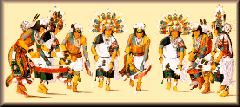
Hopi Butterfly Dance
This painting depicts a performance of the traditional Hopi Butterfly dance. This dance was not important in a ceremonial sense; instead it is known as a pastime dance. These dances were simply social and did not have the deep significance of dances such as the Snake. The Butterfly Dance was performed in the late summer.


Flathead Indian War Dance Song
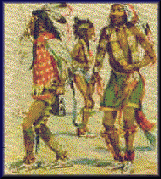
Traditional music among Flathead Indians of western Montana centers primarily around songs for personal power and daily activities. This music is mainly vocal, with the descending melodic line (as in Plains Indian singing), and no harmony used. Drumming is heard mostly in war songs with repeated eighth notes, which are slowed down at the end of a song. This example is a war dance song, which is traditionally performed by men.
"War Dance Song" from Songs and Dances of the Flathead Indians (Cat. # Folkways FE 4445) (p)1953
Smithsonian/Folkways Recordings. All rights reserved
GO TO "Cherokee"
Return to Main Menu
djùnà' ái bìdà' tíngè' t' á ìgaì dì gò'
Sun, his doorway outside, White water, four-ply
bè dà' gùnòyè gè' dè yà tc' ìndí dì
By, above, mirage at, he walks, they say
djígùnà' ái bìjà jé' dá à' dj ' dè yà tc' ìndí d
Sun, his child one day he walks they say
'ìckî n dá à' dj ' dè yà h dè yà tc' ìndí d
Boy, one day the one who walks, he walks they say
djùnà' ái bì dùt ' ìjì bìnànt' à' nànt' à' dòxá yò'
Sun, his turquoise his chief, chief never
bì ' ágòdo dí ì' bì dìs' èsts' tc' ìndí
has he trouble with him sound approaches they say
djùnà' ái bè bì' ò' gùnòyè ì' yè
Sun by, before him mirage by
bì' ò' gùnòyè gò' dè yà tc' ìndì
before him mirage forming he walks they say
nùgùsts' án biìká' 'ìyú ndzìní' dò à'
Earth on top of, witches none
hà bídòl gò' dè yà tc' ìndí d
Can harm him, he walks they say
nùgùsts' án biìká' dé 'ì tc' ' òdàsdjà í'
Earth on top of, people scattered about
bìyá tì' jò ní bìnàtsé kè s jò ní' bìdlùk jò ní
Their talk good, their thoughts good, their laugther good
bínà lzé' 'í t' à' dá' jò dí dò bé' ó ltà' gò'
Their property of all kinds, good, uncountable
yèxáidèlà gò dè yà tc' ìndí d
Having been prepared he walks they say
'ìs' à' nà yái k' è' gòjó gò' yèxáidèlà gò dè yà tc' ìndí d
Long life like, good, having been prepared he walks they say
The "ìdìyi á" "he make it walk" ceremony and song's sole purpose is to aid children who are slow at learning to walk. Through this song, the offering of prayer and life-long protection from evil is given. This ceremony can be performed for children before twelve months of age to ensure they will walk on or before their first year. When performing this ceremony a man or women can perform the rites. If not done by a close blood relative, then hire a medicine man or medicine woman. The rite takes about ten minutes each night, repeated for four nights under a clear night sky. Give a gift of turquoise, made with downy eagle feathers.
'ìs' à' nà yái k' è' gòjó 'àná' hòkùs
Long life like, good, moves back and forth
t' á ìgaì bìt ' á' éd yùd 'á lzà tc' ìndí
White water underneath in a circle, it is made, they say.
'ákó gò' t' á ìgaì bìká' nà' íljò jgò 'á lzà tc' ìndí
Then White water, on it, spread across it is made they say
yò gài sìyùdì 'ìt á' nèz' ágò' 'á lzà tc' ìndí
White shell curved over, beneath it rests, it is made, they say
gòdìt' ó' bàsxà' híljìj tc' ìndí
Lightning alongside dances, they say
gòdìt' ó' bèbìk' è nà ìst ' ó tc' ìndí
Lightning by it fastened across, they say
hí tsát ' ùl bìt' ùl 'á lzà tc' ìndí
Rainbow its rope it is made they say
t' ádì xì bìtc' ìd bìt ' á' sì tsò z
Black water blanket underneath rests
t' á ìgaì bìtc' ìd bìt ' á' sì tsò z
White water blanket underneath rests
'ìs' à' nà yái k' è' gòjó ts' á 'á lzà tc' ìndí
Long life like, good, baby-carrier it is made they say
djùnà' ái bìnànt' à' bè bìyì' gùdìtní tc' ìndí
Sun, his chief, by, inside it rumbles they say
The "gojo si" is a "cradle song" ceremony and song whose sole purpose is to aid and provide supernatural powers to baby girls into womanhood. Through this song, the offering of prayer and life-long protection from evil is given. This ceremony is to be performed for baby girls into puberty to ensure their fertility before marriage. When performing this ceremony a man or women can perform the rites. If not done by a close blood relative, then hire a medicine man or medicine woman. The rite includes making a cradle from wood collected by the girl's family, not in their cycle. While making the cradle the song will be sung under a clear night sky. When the song is finished a women or man will place the girl into the cradle and will put prehistoric shell ornaments onto the cradle. The cradle is never to be touched by Mother Earth. It is said to take away the girls fertility. Gifts are of corn or meal. The performers of this song ceremony will receive the equivalent of a life of respect and care.
The Friendship Prayer
Si' -Zi' bìyì' éd yùd di" di' ?isZa'ni' tc' ìndí
I stand inside a circle man, women they say
'ìs' à' nà yái éd yùd 'á lzà tc' ìndí
Long life in a circle, it is made, they say
bìyì' éd yùd híljìj 'ìs' à' nà yái tc' ìndí
Inside in a circle, dances, long life they say
yèxáidèlà gò dè yà k' è' gòjó zee tsá lit' tc' ìndí d
Having been prepared he walks like good, friends they say
Á bìtc' ìd bìt ' á' ná ná ni? sì tsò z
A blanket underneath mother earth rests
nùgùsts' án biìká' dé ' ì tc' ' òdàsdjà í'
Earth on top of, people scattered about
bìyá tì' jò ní bìnàtsé kè s jò ní' bìdlùk jò ní
their talk good, their thoughts good, their laugther good
bínà lzé' 'í t' à' dá' jò dí dò bé' ó ltà' gò'
their property of all kinds, good, uncountable
yèxáidèlà gò dè yà tc' ìndí d
Having been prepared he walks they say
'ìs' à' nà yái k' è' gòjó gò' nànt' à' dòxá yò' bì ' ágòdo dí ì'
Long life like, good, chief never has he trouble
yèxáidèlà gò dè yà tc' ìndí d
Having been prepared he walks they say
The "zee tsa lit ni'" "friendship prayer" song is an offering of prayer and life long protection from evil. This ceremony can be performed in the presence of a sacred candle or fire to ensure the spirits will hear your prayers. When performing this ceremony a man or women can perform the rites. If not done by a close blood relative, then hire a medicine man or medicine woman. The rite takes about ten minutes each night, repeated for four nights under a clear night sky. Give a gift of turquoise, made with downy eagle feathers.
Lipan Apache
DANCERS
Hopi Butterfly Dance
This painting depicts a performance of the traditional Hopi Butterfly dance. This dance was not important in a ceremonial sense; instead it is known as a pastime dance. These dances were simply social and did not have the deep significance of dances such as the Snake. The Butterfly Dance was performed in the late summer.
Flathead Indian War Dance Song
Traditional music among Flathead Indians of western Montana centers primarily around songs for personal power and daily activities. This music is mainly vocal, with the descending melodic line (as in Plains Indian singing), and no harmony used. Drumming is heard mostly in war songs with repeated eighth notes, which are slowed down at the end of a song. This example is a war dance song, which is traditionally performed by men.
"War Dance Song" from Songs and Dances of the Flathead Indians (Cat. # Folkways FE 4445) (p)1953
Smithsonian/Folkways Recordings. All rights reserved
GO TO "Cherokee"
Return toMain Menu
This painting depicts a performance of the traditional Hopi Butterfly dance. This dance was not important in a ceremonial sense; instead it is known as a pastime dance. These dances were simply social and did not have the deep significance of dances such as the Snake. The Butterfly Dance was performed in the late summer.
Flathead Indian War Dance Song
Traditional music among Flathead Indians of western Montana centers primarily around songs for personal power and daily activities. This music is mainly vocal, with the descending melodic line (as in Plains Indian singing), and no harmony used. Drumming is heard mostly in war songs with repeated eighth notes, which are slowed down at the end of a song. This example is a war dance song, which is traditionally performed by men.
"War Dance Song" from Songs and Dances of the Flathead Indians (Cat. # Folkways FE 4445) (p)1953
Smithsonian/Folkways Recordings. All rights reserved
GO TO "Cherokee"
Return toMain Menu
Smithsonian/Folkways Recordings. All rights reserved
GO TO "Cherokee"
Main Menu