

A band of Cheyenne Indians went on one of their visits to Bear's Tipi to worship the Great Spirit; as did many
other tribes before the white man came. The Cheyenne braves took their families with them as they felt that would be safe as Bear's Tipi was a holy place.
Having camped there for several days, one of the Cheyenne braves noticed that his wife was often gone from camp, staying away for a short time. As time went on he noticed that she was gone longer than before. This brave could not understand why his wife should be gone from their lodge so much as he had always been devoted to her and being a good hunter, as well as a brave warrior, she always had much buffalo, antelope, and deer meat. He furnished her fine skins to make nice clothes, becoming suspicious that some other brave in his band might be courting his wife, he watched to see what man was missing when his wife left camp. He found that no man was missing when his wife was gone. This man also saw that his wife had a skin over her shoulders now that she did not wear before coming to this camp.
One day when she had been gone longer than usual, he laid in wait for her, on her return he asked her where she had been and what drew her from camp so much of the time. She would not answer any of his questions. Then the man became mad and tore the skin from her shoulders and saw that she was covered with scratches. He demanded that she tell him which man had abused her. Becoming frightened at the way her husband was acting she told him that she had been charmed by a very big bear that lived in the big rock. The bear had no mate and had become infatuated with her while she was out gathering fruit. Fearing for the safety of the camp, she had submitted to the bear’s embraces, which accounted for the scratches on her shoulders.
Then the warrior told his wife to lead him to the bear so he could kill it. When they found the bear, the man had great fear because the bear was big, very big. The bear slapped the woman with his paw and changed her into a bear. The man ran to the camp to get the rest of the braves to help him kill the big bear.
They found the bear had crawled into a cave, leaving his hind feet in the door. The bear’s feet were so big that nobody could get past them. They could not get close enough to the bear to kill him so they shot at his feet to make him come out. When the bear came out he was so big that all the warriors were scared and climbed up on a big rock. The men were so scared that they prayed to the Great Spirit to save them.
In answer to their prayers, the rock began to grow up out of the ground and when it stopped it was very high. The bear jumped at the men and on the fourth jump his claws were on the top. The Great Spirit had helped the men and now they had great courage and they shot the bear and killed him.
When the bear fell, he fell backwards and pushed the big rock, which made it lean. After that, the bear-woman made this big rock her home, so the Cheyenne called it, "Bear's Tipi".
by Thomas E. Mails and excerpts from James Mooney

Eagle War Feathers
Cheyenne Legend
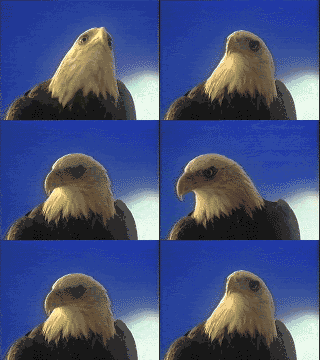
A long, long time ago the Cheyenne warriors had not learned yet how to use eagle feathers for their war ornaments. One of their men climbed a high mountain, there he lay for five days, without food. Some powerful being, he hoped, would see him and come to him and teach him something great for his people.
He was glad when he heard a voice say, "Try to be brave, no matter what happens, even if it might kill you. If you remember these words, you will bring great news to your people, and help them." After a time he heard voices, and seven eagles came down as if to fly away with him.
He was brave, as he had been told, though he continued to cry and kept his eyes closed. Now the great eagles surrounded him. One said "Look at me. I am powerful, and I have wonderfully strong feathers. I am greater than all other animals and birds in the world."
This powerful eagle showed the man his wings and his tail, and he spread all his feathers as wide as possible. He showed him how to make war head-dresses and ornaments out of eagle feathers.
"Your people must use only eagle feathers, and it would be a great help to them in war and bring them victories," eagle said.
Since no loose feathers were about, the seven eagles shook themselves, and lots of feathers fell to the ground. The Cheyenne picked them up and gratefully took them home to his tribe. On that day, eagle feathers were seen for the first time by the Cheyenne and they knew where they came from.
The man showed his people how to make war ornaments from the eagle feathers, as he had been told. From that day onward, the man became a great warrior in his tribe, and their leader in war parties.
He became so successful his people named him Chief Eagle Feather and he wore his Eagle Feather Warbonnet, as he led the Cheyenne with dignity and pride.
Yellowstone Valley and the Great Flood
(Cheyenne Legend)
"It has been told on the Cheyenne Reservation in Montana and the Seminole camps in the Florida Everglades; It is heard from the Eskimos north of the Arctic Circle and the Indians south of the equator.
The legend of the flood is the most universal of all legends. It is told in Asia, Africa, and Europe, in North America and the South Pacific." Professor Hap Gilliland of Eastern Montana College was the first to record this legend of the great flood.
This is one of the fifteen legends of the flood that he himself recorded in various parts of the world:
He was an old Indian. his face was weather beaten, but his eyes were still bright. I never knew what tribe he was from, though I could guess. Yet others from the tribe whom I talked to later had never heard his story.
We had been talking of the visions of the young men. He sat for a long time, looking out across the Yellowstone
Valley through the pouring rain, before he spoke. "They are beginning to come back," he said.
"Who is coming back?" I asked.
"The animals," he said. "It has happened before."
"Tell me about it."
He thought for a long while before he lifted his hands and his eyes. "The Great Spirit smiled on this land when
he made it. There were mountains and plains, forests and grasslands. There were animals of many kinds--and men."
The old man's hands moved smoothly, telling the story more clearly than his voice.
The Great Spirit told the people, "These animals are your brothers. Share the land with them. They will give you food and clothing. Live with them and protect them."
"Protect especially the buffalo, for the buffalo will give you food and shelter. The hide of the buffalo will
keep you from the cold, from the heat, and from the rain.
As long as you have the buffalo, you will never need to suffer."
For many winters the people lived at peace with the animals and with the land. When they killed a buffalo,
they thanked the Great Spirit, and they used every part of the buffalo. It took care of every need.
Then other people came. They did not think of the animals as brothers. They killed, even when they did not need food. They burned and cut the forests, and the animals died. They shot the buffalo and called it sport. They killed the fish in the streams.
When the Great Spirit looked down, he was sad. He let the smoke of the fires lie in the valleys. The people
coughed and choked. But still they burned and they killed. So the Great Spirit sent rains to put out the fires and to destroy the people.
The rains fell, and the waters rose. The people moved from the flooded valleys to the higher land.
Spotted Bear, the medicine man, gathered together his people. He said to them, "The Great Spirit has told us
that as long as we have the buffalo we will be safe from heat and cold and rain. But there are no longer any buffalo. Unless we can find buffalo and live at peace with nature, we will all die."
Still the rains fell, and the waters rose. The people moved from the flooded plains to the hills. The young men went out and hunted for the buffalo. As they went they put out the fires. They made friends with the animals once more. They cleaned out the streams.
Still the rains fell, and the waters rose. The people moved from the flooded hills to the mountains.
Two young men came to Spotted Bear. "We have found the buffalo," they said. "There was a cow, a calf, and a great white bull. The cow and the calf climbed up to the safety of the mountains. They should be back when the rain stops."
"But the bank gave way, and the bull was swept away by the floodwaters. We followed and got him to shore, but he had drowned. We have brought you his hide."
They unfolded a huge white buffalo skin.
Spotted Bear took the white buffalo hide. "Many people have been drowned," he said. "Our food has been carried
away. But our young people are no longer destroying the world that was created for them. They have found the white buffalo.
It will save those who are left."
Still the rains fell, and the waters rose. The people moved from the flooded mountains to the highest peaks.
Spotted Bear spread the white buffalo skin on the ground. He and the other medicine men scraped it and stretched it, and scraped it and stretched it.
Still the rains fell. Like all rawhide, the buffalo skin stretched when it was wet. Spotted Bear stretched it out over the village. All the people who were left crowded under it.
As the rains fell, the medicine men stretched the buffalo skin across the mountains. Each day they stretched it farther.
Then Spotted Bear tied one corner to the top of the Big Horn Mountains. That side, he fastened to the Pryors.
The next corner he tied to the Bear Tooth Mountains. Crossing the Yellowstone Valley, he tied one corner to the Crazy Mountains, and the other to Signal Butte in the Bull Mountains.
The whole Yellowstone Valley was covered by the white buffalo skin. Though the rain still fell above, it did not fall in the Yellowstone Valley. The waters sank away. Animals from the outside moved into the valley, under the white buffalo skin. The people shared the valley with them.
Still the rains fell above the buffalo skin. The skin stretched and began to sag.
Spotted Bear stood on the Bridger Mountains and raised the west end of the buffalo skin to catch the West Wind. The West Wind rushed in and was caught under the buffalo skin. The wind lifted the skin until it formed a great dome over the valley.
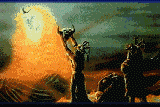
The Great Spirit saw that the people were living at peace with the earth. The rains stopped, and the sun shone. As the sun shone on the white buffalo skin, it gleamed with colours of red and yellow and blue. As the sun shone on the rawhide, it began to shrink. The ends of the dome shrank away until all that was left was one great arch across the valley.
The old man's voice faded away; but his hands said, "Look," and his arms moved toward the valley.
The rain had stopped and a rainbow arched across the Yellowstone Valley.
A buffalo calf and its mother grazed beneath it.
Excerpt from Jerry Jacka.
THE BOY
Cheyenne
One of these magic dances was held when the boy was about ten. He made his grandmother ask if he could take part, and the medicine men let him enter the lodge. "Where do you want to live?" the chief of the medicine men asked, meaning "Where do you want to sit?" Without ceremony the boy took his seat beside the chief.
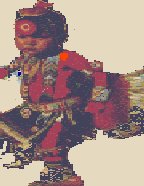
To the man who had ushered him in, the child gave directions to paint his body red and draw black rings around his face, wrists and ankles.
The performance began at one end of the circle. When the boy's turn came, he told the people what he was going to do. He used sweet grass to burn incense. Then he passed his buffalo sinew bowstring east, south, west, and north through the smoke.
He asked two men to assist him and told them to tie his bowstring around his neck, cover his body with his robe, and pull at the ends of the string. They pulled with all their might, but they could not move him. He told them to pull harder, and as they tugged at the string, his head was severed. It rolled out from under the robe, and the men put it back.
Next the men lifted the robe up. Instead of the boy, a very old man was sitting in his place. They covered the old man with the robe and pulled it away again, this time revealing a pile of human bones with a skull. A third time they placed the robe over the bones and lifted it.
Nothing at a ll was there. But when for a fourth time they spread the robe over the empty space and removed it, the wonderful boy sat in his place is if nothing had happened.
After the magic dance, the Cheyenne moved their camp to hunt buffalo. When a kill had been made, the wonderful boy led a crowd of boys who went hunting for calves that might return to the place where they last saw their mothers.
The boys found five or six calves, surrounded them, and killed a two-year-old with their arrows. They began to skin it very carefully with bone knives, keeping the hide of the head intact and leaving the hooves on, because the wonderful boy wanted the skin for a robe.
While they worked, a man driving a dog team approached them. It was Young Wolf, head chief of the tribe, who had come to the killing ground to gather what bones had been left. He said, "My children have favored me at last! I'll take charge of this buffalo; you boys go on off."
The children obeyed, except for the wonderful boy, who kept skinning as he explained that he wanted only the hide for a robe. The chief pushed the wonderful boy aside, but the boy returned and resumed skinning.
Then the chief jerked the boy away and threw him down. The boy got up and continued his work. Pretending that he was skinning one of the hind legs, he cut the leg off at the knee and left the hoof on.
When the chief shouldered the boy out of the way and took over the work, the wonderful boy struck him on the back of the head with the buffalo leg. The chief fell dead.
The boys ran to the camp and told the story, which caused great excitement. The warriors assembled and decided to kill the wonderful boy. They went out to look for him near the body of their chief, but the boy had returned to camp. He was sitting in his grandmother's lodge while she cooked food for him in an earthen pot, when suddenly the whole tipi was raised by the warriors. Quickly the wonderful boy kicked the pot over, sending the contents into the fire. As the smoke billowed up the boy rose with it. The old woman was left sitting alone.
The warriors looked around and saw the boy about a quarter of a mile away, walking off toward the east. They ran after him but could not seem to draw closer. Four times they chased him with no success, and then gave up.
People became afraid of the wonderful boy. Still, they looked for him every day and at last saw him on the top of a nearby hill. The whole camp gathered to watch as he appeared on the summit five times, each time in a different dress.
First he came as a Red Shield warrior in a headdress made out of buffalo skin. He had horns, a spear, a red shield, and two buffalo tails tied to each arm.
The second time be was a Coyote warrior, with his body painted black and yellow and with two eagle feathers stickin up on his head.
The third time he appeared as a Dog 9 Man warrior wearing a feathered headdress and carrying an eagle-bone whistle, a rattle of buffalo hoof, and a bow and arrows.
The fourth time he was a Hoof Rattle warrior. His body was painted, and he had a rattle to sing by and a spear about eight feet long, with a crook at one end and the shaft at the other end bent in a semi-circle.
The fifth time his body was painted white, and on his forehead he wore a white owl skin.
After this the wonderful boy disappeared entirely. No one knew where he went, people thought him dead, and would be soon forgotten. The buffalo disappeared and famine came to the Cheyenne.
During this time the wonderful boy traveled alone into the highest ranges of the mountains. As he drew near a certain peak, a door opened in the mountain slope. He passed through into the earth, and the opening closed after him.
There inside the mountain he found a large circle of men. Each represented a tribe and was seated beneath that tribe's bundle. They welcomed the wonderful boy and pointed out the one empty place under a bundle wrapped in fox skin. "If you take this seat, the bundle will be yours to carry back to the Cheyenne," the head man said. "But first you will remain here for four years, receiving instruction in order to become your tribe's prophet and counselor."
The wonderful boy accepted the bundle, and all the men gave thanks. When his turn came to perform the bundle ceremony, they took it down and showed him its sacred ceremonies, songs, and four medicine arrows, each representing certain powers.
Then for four years under the mountain peak, they taught him prophecies, magic, and ceremonies for warfare and hunting.
Meanwhile the Cheyenne were weak with hunger, threatened by starvation. All the animals had died, and the people ate herbs. One day as the tribe was traveling in search of food, five children lagged behind to look for herbs and mushrooms.
Suddenly the wonderful boy, now a young man bearing the name of Arrow Boy, appeared before them. "My poor children, throw away those mushrooms," he said. "It is I who brought famine among you, for I was angry with your people when they drove me from their camp. I have returned to provide for you; you shall not hunger in the future. Go and gather some dried buffalo bones, and I will feed you."
The children ran away and picked up buffalo bones, and the wonderful boy, Arrow Boy, made a few passes that turned them into fresh meat. He fed the children with fat, marrow, liver, and other strengthening parts of the buffalo. When they had eaten all they wanted, he gave them fat and meat. "Take this to your people," he said. "Tell them that I, Motzeyouf, Arrow Boy, have returned."
Though the boys ran to the camp, Motzeyouf used his magic to reach it first. He entered the lodge of his uncle and lay down to rest, for he was tired. The uncle and his wife were sitting just outside, but they did not see Arrow Boy pass by.
The boys arrived in camp with their tale, which created great excitement. The uncle's wife went into the lodge to get a pipe, and it was then that she saw Arrow Boy lying covered with a buffalo robe. The robe, and his shirt, leggings, and moccasins, all were painted red. Guessing that he was Motzeyouf, the men went into the lodge, asked the stranger to sit up, and cried over him. They saw his bundle, and knowing that he had power, they asked him what they should do.
Motzeyouf told the Cheyenne to camp in a circle and set up a large tipi in the center. When this had been done, he called all the medicine men to bring their rattles and pipes. Then he went into the tipi and sang the sacred songs that he had learned. It was night before he came to the song about the fourth arrow. In the darkness the buffalo returned with a roar like thunder.
The frightened Cheyenne went in to Arrow Boy and asked him what to do. "Go and sleep," he said, "for the buffalo, your food, has returned to you." The roar of the buffalo continued through the night as long as he sang.
The next morning the land was covered with buffalo, and the people went out and killed all they wanted. From that time forth, owing to the medicine arrows, the Cheyenne had plenty to eat and great powers.
From a tale reported by George A. Dorsey.
The medicine arrows brought down from the mountains by Motzeyouf still exist and are cared for by the Arrow Keeper of the Southern Cheyenne in Oklahoma.

GO TO "More Cheyenne Legends"
Return to Main Menu
A long, long time ago the Cheyenne warriors had not learned yet how to use eagle feathers for their war ornaments. One of their men climbed a high mountain, there he lay for five days, without food. Some powerful being, he hoped, would see him and come to him and teach him something great for his people. He was glad when he heard a voice say, "Try to be brave, no matter what happens, even if it might kill you. If you remember these words, you will bring great news to your people, and help them." After a time he heard voices, and seven eagles came down as if to fly away with him.
He was brave, as he had been told, though he continued to cry and kept his eyes closed. Now the great eagles surrounded him. One said "Look at me. I am powerful, and I have wonderfully strong feathers. I am greater than all other animals and birds in the world."
This powerful eagle showed the man his wings and his tail, and he spread all his feathers as wide as possible. He showed him how to make war head-dresses and ornaments out of eagle feathers.
"Your people must use only eagle feathers, and it would be a great help to them in war and bring them victories," eagle said.
Since no loose feathers were about, the seven eagles shook themselves, and lots of feathers fell to the ground. The Cheyenne picked them up and gratefully took them home to his tribe. On that day, eagle feathers were seen for the first time by the Cheyenne and they knew where they came from.
The man showed his people how to make war ornaments from the eagle feathers, as he had been told. From that day onward, the man became a great warrior in his tribe, and their leader in war parties.
He became so successful his people named him Chief Eagle Feather and he wore his Eagle Feather Warbonnet, as he led the Cheyenne with dignity and pride.
"It has been told on the Cheyenne Reservation in Montana and the Seminole camps in the Florida Everglades; It is heard from the Eskimos north of the Arctic Circle and the Indians south of the equator. The legend of the flood is the most universal of all legends. It is told in Asia, Africa, and Europe, in North America and the South Pacific." Professor Hap Gilliland of Eastern Montana College was the first to record this legend of the great flood. This is one of the fifteen legends of the flood that he himself recorded in various parts of the world: He was an old Indian. his face was weather beaten, but his eyes were still bright. I never knew what tribe he was from, though I could guess. Yet others from the tribe whom I talked to later had never heard his story. We had been talking of the visions of the young men. He sat for a long time, looking out across the Yellowstone
Valley through the pouring rain, before he spoke. "They are beginning to come back," he said.
"The animals," he said. "It has happened before."
"Tell me about it."
He thought for a long while before he lifted his hands and his eyes. "The Great Spirit smiled on this land when
he made it. There were mountains and plains, forests and grasslands. There were animals of many kinds--and men."
The old man's hands moved smoothly, telling the story more clearly than his voice.
The Great Spirit told the people, "These animals are your brothers. Share the land with them. They will give you food and clothing. Live with them and protect them."
"Protect especially the buffalo, for the buffalo will give you food and shelter. The hide of the buffalo will
keep you from the cold, from the heat, and from the rain.
As long as you have the buffalo, you will never need to suffer."
For many winters the people lived at peace with the animals and with the land. When they killed a buffalo,
they thanked the Great Spirit, and they used every part of the buffalo. It took care of every need.
Then other people came. They did not think of the animals as brothers. They killed, even when they did not need food. They burned and cut the forests, and the animals died. They shot the buffalo and called it sport. They killed the fish in the streams.
When the Great Spirit looked down, he was sad. He let the smoke of the fires lie in the valleys. The people
coughed and choked. But still they burned and they killed. So the Great Spirit sent rains to put out the fires and to destroy the people.
The rains fell, and the waters rose. The people moved from the flooded valleys to the higher land.
Spotted Bear, the medicine man, gathered together his people. He said to them, "The Great Spirit has told us
that as long as we have the buffalo we will be safe from heat and cold and rain. But there are no longer any buffalo. Unless we can find buffalo and live at peace with nature, we will all die."
Still the rains fell, and the waters rose. The people moved from the flooded plains to the hills. The young men went out and hunted for the buffalo. As they went they put out the fires. They made friends with the animals once more. They cleaned out the streams.
Still the rains fell, and the waters rose. The people moved from the flooded hills to the mountains.
Two young men came to Spotted Bear. "We have found the buffalo," they said. "There was a cow, a calf, and a great white bull. The cow and the calf climbed up to the safety of the mountains. They should be back when the rain stops."
"But the bank gave way, and the bull was swept away by the floodwaters. We followed and got him to shore, but he had drowned. We have brought you his hide."
Spotted Bear took the white buffalo hide. "Many people have been drowned," he said. "Our food has been carried
away. But our young people are no longer destroying the world that was created for them. They have found the white buffalo.
It will save those who are left."
Still the rains fell, and the waters rose. The people moved from the flooded mountains to the highest peaks.
Spotted Bear spread the white buffalo skin on the ground. He and the other medicine men scraped it and stretched it, and scraped it and stretched it.
Still the rains fell. Like all rawhide, the buffalo skin stretched when it was wet. Spotted Bear stretched it out over the village. All the people who were left crowded under it.
As the rains fell, the medicine men stretched the buffalo skin across the mountains. Each day they stretched it farther.
Then Spotted Bear tied one corner to the top of the Big Horn Mountains. That side, he fastened to the Pryors.
The next corner he tied to the Bear Tooth Mountains. Crossing the Yellowstone Valley, he tied one corner to the Crazy Mountains, and the other to Signal Butte in the Bull Mountains.
The whole Yellowstone Valley was covered by the white buffalo skin. Though the rain still fell above, it did not fall in the Yellowstone Valley. The waters sank away. Animals from the outside moved into the valley, under the white buffalo skin. The people shared the valley with them.
Spotted Bear stood on the Bridger Mountains and raised the west end of the buffalo skin to catch the West Wind. The West Wind rushed in and was caught under the buffalo skin. The wind lifted the skin until it formed a great dome over the valley.
The Great Spirit saw that the people were living at peace with the earth. The rains stopped, and the sun shone. As the sun shone on the white buffalo skin, it gleamed with colours of red and yellow and blue. As the sun shone on the rawhide, it began to shrink. The ends of the dome shrank away until all that was left was one great arch across the valley.
The old man's voice faded away; but his hands said, "Look," and his arms moved toward the valley.
A buffalo calf and its mother grazed beneath it.
Excerpt from Jerry Jacka.
THE BOY
Cheyenne
One of these magic dances was held when the boy was about ten. He made his grandmother ask if he could take part, and the medicine men let him enter the lodge. "Where do you want to live?" the chief of the medicine men asked, meaning "Where do you want to sit?" Without ceremony the boy took his seat beside the chief.
To the man who had ushered him in, the child gave directions to paint his body red and draw black rings around his face, wrists and ankles.
The performance began at one end of the circle. When the boy's turn came, he told the people what he was going to do. He used sweet grass to burn incense. Then he passed his buffalo sinew bowstring east, south, west, and north through the smoke.
He asked two men to assist him and told them to tie his bowstring around his neck, cover his body with his robe, and pull at the ends of the string. They pulled with all their might, but they could not move him. He told them to pull harder, and as they tugged at the string, his head was severed. It rolled out from under the robe, and the men put it back.
Next the men lifted the robe up. Instead of the boy, a very old man was sitting in his place. They covered the old man with the robe and pulled it away again, this time revealing a pile of human bones with a skull. A third time they placed the robe over the bones and lifted it.
Nothing at a ll was there. But when for a fourth time they spread the robe over the empty space and removed it, the wonderful boy sat in his place is if nothing had happened.
After the magic dance, the Cheyenne moved their camp to hunt buffalo. When a kill had been made, the wonderful boy led a crowd of boys who went hunting for calves that might return to the place where they last saw their mothers.
The boys found five or six calves, surrounded them, and killed a two-year-old with their arrows. They began to skin it very carefully with bone knives, keeping the hide of the head intact and leaving the hooves on, because the wonderful boy wanted the skin for a robe.
While they worked, a man driving a dog team approached them. It was Young Wolf, head chief of the tribe, who had come to the killing ground to gather what bones had been left. He said, "My children have favored me at last! I'll take charge of this buffalo; you boys go on off."
The children obeyed, except for the wonderful boy, who kept skinning as he explained that he wanted only the hide for a robe. The chief pushed the wonderful boy aside, but the boy returned and resumed skinning.
Then the chief jerked the boy away and threw him down. The boy got up and continued his work. Pretending that he was skinning one of the hind legs, he cut the leg off at the knee and left the hoof on.
When the chief shouldered the boy out of the way and took over the work, the wonderful boy struck him on the back of the head with the buffalo leg. The chief fell dead.
The boys ran to the camp and told the story, which caused great excitement. The warriors assembled and decided to kill the wonderful boy. They went out to look for him near the body of their chief, but the boy had returned to camp. He was sitting in his grandmother's lodge while she cooked food for him in an earthen pot, when suddenly the whole tipi was raised by the warriors. Quickly the wonderful boy kicked the pot over, sending the contents into the fire. As the smoke billowed up the boy rose with it. The old woman was left sitting alone.
The warriors looked around and saw the boy about a quarter of a mile away, walking off toward the east. They ran after him but could not seem to draw closer. Four times they chased him with no success, and then gave up.
People became afraid of the wonderful boy. Still, they looked for him every day and at last saw him on the top of a nearby hill. The whole camp gathered to watch as he appeared on the summit five times, each time in a different dress.
First he came as a Red Shield warrior in a headdress made out of buffalo skin. He had horns, a spear, a red shield, and two buffalo tails tied to each arm.
The second time be was a Coyote warrior, with his body painted black and yellow and with two eagle feathers stickin up on his head.
The third time he appeared as a Dog 9 Man warrior wearing a feathered headdress and carrying an eagle-bone whistle, a rattle of buffalo hoof, and a bow and arrows.
The fourth time he was a Hoof Rattle warrior. His body was painted, and he had a rattle to sing by and a spear about eight feet long, with a crook at one end and the shaft at the other end bent in a semi-circle.
The fifth time his body was painted white, and on his forehead he wore a white owl skin.
After this the wonderful boy disappeared entirely. No one knew where he went, people thought him dead, and would be soon forgotten. The buffalo disappeared and famine came to the Cheyenne.
During this time the wonderful boy traveled alone into the highest ranges of the mountains. As he drew near a certain peak, a door opened in the mountain slope. He passed through into the earth, and the opening closed after him.
There inside the mountain he found a large circle of men. Each represented a tribe and was seated beneath that tribe's bundle. They welcomed the wonderful boy and pointed out the one empty place under a bundle wrapped in fox skin. "If you take this seat, the bundle will be yours to carry back to the Cheyenne," the head man said. "But first you will remain here for four years, receiving instruction in order to become your tribe's prophet and counselor."
The wonderful boy accepted the bundle, and all the men gave thanks. When his turn came to perform the bundle ceremony, they took it down and showed him its sacred ceremonies, songs, and four medicine arrows, each representing certain powers.
Then for four years under the mountain peak, they taught him prophecies, magic, and ceremonies for warfare and hunting.
Meanwhile the Cheyenne were weak with hunger, threatened by starvation. All the animals had died, and the people ate herbs. One day as the tribe was traveling in search of food, five children lagged behind to look for herbs and mushrooms.
Suddenly the wonderful boy, now a young man bearing the name of Arrow Boy, appeared before them. "My poor children, throw away those mushrooms," he said. "It is I who brought famine among you, for I was angry with your people when they drove me from their camp. I have returned to provide for you; you shall not hunger in the future. Go and gather some dried buffalo bones, and I will feed you."
The children ran away and picked up buffalo bones, and the wonderful boy, Arrow Boy, made a few passes that turned them into fresh meat. He fed the children with fat, marrow, liver, and other strengthening parts of the buffalo. When they had eaten all they wanted, he gave them fat and meat. "Take this to your people," he said. "Tell them that I, Motzeyouf, Arrow Boy, have returned."
Though the boys ran to the camp, Motzeyouf used his magic to reach it first. He entered the lodge of his uncle and lay down to rest, for he was tired. The uncle and his wife were sitting just outside, but they did not see Arrow Boy pass by.
The boys arrived in camp with their tale, which created great excitement. The uncle's wife went into the lodge to get a pipe, and it was then that she saw Arrow Boy lying covered with a buffalo robe. The robe, and his shirt, leggings, and moccasins, all were painted red. Guessing that he was Motzeyouf, the men went into the lodge, asked the stranger to sit up, and cried over him. They saw his bundle, and knowing that he had power, they asked him what they should do.
Motzeyouf told the Cheyenne to camp in a circle and set up a large tipi in the center. When this had been done, he called all the medicine men to bring their rattles and pipes. Then he went into the tipi and sang the sacred songs that he had learned. It was night before he came to the song about the fourth arrow. In the darkness the buffalo returned with a roar like thunder.
The frightened Cheyenne went in to Arrow Boy and asked him what to do. "Go and sleep," he said, "for the buffalo, your food, has returned to you." The roar of the buffalo continued through the night as long as he sang.
The next morning the land was covered with buffalo, and the people went out and killed all they wanted. From that time forth, owing to the medicine arrows, the Cheyenne had plenty to eat and great powers.
From a tale reported by George A. Dorsey.
The medicine arrows brought down from the mountains by Motzeyouf still exist and are cared for by the Arrow Keeper of the Southern Cheyenne in Oklahoma.
GO TO "More Cheyenne Legends"
Return toMain Menu
One of these magic dances was held when the boy was about ten. He made his grandmother ask if he could take part, and the medicine men let him enter the lodge. "Where do you want to live?" the chief of the medicine men asked, meaning "Where do you want to sit?" Without ceremony the boy took his seat beside the chief. To the man who had ushered him in, the child gave directions to paint his body red and draw black rings around his face, wrists and ankles. The performance began at one end of the circle. When the boy's turn came, he told the people what he was going to do. He used sweet grass to burn incense. Then he passed his buffalo sinew bowstring east, south, west, and north through the smoke. He asked two men to assist him and told them to tie his bowstring around his neck, cover his body with his robe, and pull at the ends of the string. They pulled with all their might, but they could not move him. He told them to pull harder, and as they tugged at the string, his head was severed. It rolled out from under the robe, and the men put it back. Next the men lifted the robe up. Instead of the boy, a very old man was sitting in his place. They covered the old man with the robe and pulled it away again, this time revealing a pile of human bones with a skull. A third time they placed the robe over the bones and lifted it. Nothing at a ll was there. But when for a fourth time they spread the robe over the empty space and removed it, the wonderful boy sat in his place is if nothing had happened. The boys found five or six calves, surrounded them, and killed a two-year-old with their arrows. They began to skin it very carefully with bone knives, keeping the hide of the head intact and leaving the hooves on, because the wonderful boy wanted the skin for a robe.
After the magic dance, the Cheyenne moved their camp to hunt buffalo. When a kill had been made, the wonderful boy led a crowd of boys who went hunting for calves that might return to the place where they last saw their mothers.
While they worked, a man driving a dog team approached them. It was Young Wolf, head chief of the tribe, who had come to the killing ground to gather what bones had been left. He said, "My children have favored me at last! I'll take charge of this buffalo; you boys go on off."
The children obeyed, except for the wonderful boy, who kept skinning as he explained that he wanted only the hide for a robe. The chief pushed the wonderful boy aside, but the boy returned and resumed skinning.
Then the chief jerked the boy away and threw him down. The boy got up and continued his work. Pretending that he was skinning one of the hind legs, he cut the leg off at the knee and left the hoof on.
When the chief shouldered the boy out of the way and took over the work, the wonderful boy struck him on the back of the head with the buffalo leg. The chief fell dead.
The boys ran to the camp and told the story, which caused great excitement. The warriors assembled and decided to kill the wonderful boy. They went out to look for him near the body of their chief, but the boy had returned to camp. He was sitting in his grandmother's lodge while she cooked food for him in an earthen pot, when suddenly the whole tipi was raised by the warriors. Quickly the wonderful boy kicked the pot over, sending the contents into the fire. As the smoke billowed up the boy rose with it. The old woman was left sitting alone.
The warriors looked around and saw the boy about a quarter of a mile away, walking off toward the east. They ran after him but could not seem to draw closer. Four times they chased him with no success, and then gave up.
People became afraid of the wonderful boy. Still, they looked for him every day and at last saw him on the top of a nearby hill. The whole camp gathered to watch as he appeared on the summit five times, each time in a different dress.
First he came as a Red Shield warrior in a headdress made out of buffalo skin. He had horns, a spear, a red shield, and two buffalo tails tied to each arm.
The second time be was a Coyote warrior, with his body painted black and yellow and with two eagle feathers stickin up on his head.
The third time he appeared as a Dog 9 Man warrior wearing a feathered headdress and carrying an eagle-bone whistle, a rattle of buffalo hoof, and a bow and arrows.
The fourth time he was a Hoof Rattle warrior. His body was painted, and he had a rattle to sing by and a spear about eight feet long, with a crook at one end and the shaft at the other end bent in a semi-circle.
The fifth time his body was painted white, and on his forehead he wore a white owl skin.
After this the wonderful boy disappeared entirely. No one knew where he went, people thought him dead, and would be soon forgotten. The buffalo disappeared and famine came to the Cheyenne.
During this time the wonderful boy traveled alone into the highest ranges of the mountains. As he drew near a certain peak, a door opened in the mountain slope. He passed through into the earth, and the opening closed after him.
There inside the mountain he found a large circle of men. Each represented a tribe and was seated beneath that tribe's bundle. They welcomed the wonderful boy and pointed out the one empty place under a bundle wrapped in fox skin. "If you take this seat, the bundle will be yours to carry back to the Cheyenne," the head man said. "But first you will remain here for four years, receiving instruction in order to become your tribe's prophet and counselor."
The wonderful boy accepted the bundle, and all the men gave thanks. When his turn came to perform the bundle ceremony, they took it down and showed him its sacred ceremonies, songs, and four medicine arrows, each representing certain powers.
Then for four years under the mountain peak, they taught him prophecies, magic, and ceremonies for warfare and hunting.
Meanwhile the Cheyenne were weak with hunger, threatened by starvation. All the animals had died, and the people ate herbs. One day as the tribe was traveling in search of food, five children lagged behind to look for herbs and mushrooms.
Suddenly the wonderful boy, now a young man bearing the name of Arrow Boy, appeared before them. "My poor children, throw away those mushrooms," he said. "It is I who brought famine among you, for I was angry with your people when they drove me from their camp. I have returned to provide for you; you shall not hunger in the future. Go and gather some dried buffalo bones, and I will feed you."
The children ran away and picked up buffalo bones, and the wonderful boy, Arrow Boy, made a few passes that turned them into fresh meat. He fed the children with fat, marrow, liver, and other strengthening parts of the buffalo. When they had eaten all they wanted, he gave them fat and meat. "Take this to your people," he said. "Tell them that I, Motzeyouf, Arrow Boy, have returned."
Though the boys ran to the camp, Motzeyouf used his magic to reach it first. He entered the lodge of his uncle and lay down to rest, for he was tired. The uncle and his wife were sitting just outside, but they did not see Arrow Boy pass by.
The boys arrived in camp with their tale, which created great excitement. The uncle's wife went into the lodge to get a pipe, and it was then that she saw Arrow Boy lying covered with a buffalo robe. The robe, and his shirt, leggings, and moccasins, all were painted red. Guessing that he was Motzeyouf, the men went into the lodge, asked the stranger to sit up, and cried over him. They saw his bundle, and knowing that he had power, they asked him what they should do.
Motzeyouf told the Cheyenne to camp in a circle and set up a large tipi in the center. When this had been done, he called all the medicine men to bring their rattles and pipes. Then he went into the tipi and sang the sacred songs that he had learned. It was night before he came to the song about the fourth arrow. In the darkness the buffalo returned with a roar like thunder.
The frightened Cheyenne went in to Arrow Boy and asked him what to do. "Go and sleep," he said, "for the buffalo, your food, has returned to you." The roar of the buffalo continued through the night as long as he sang.
The next morning the land was covered with buffalo, and the people went out and killed all they wanted. From that time forth, owing to the medicine arrows, the Cheyenne had plenty to eat and great powers.
From a tale reported by George A. Dorsey.
The medicine arrows brought down from the mountains by Motzeyouf still exist and are cared for by the Arrow Keeper of the Southern Cheyenne in Oklahoma.
Main Menu